

In the trucking industry, the CSA (Compliance, Safety, Accountability) score is a critical measure employed by the Federal Motor Carrier Safety Administration (FMCSA) to evaluate the safety performance of commercial motor carriers and drivers.
CSA scores are based on data collected through a variety of factors, including:
- Crash indicators
- Hazardous materials compliance
- Roadside inspections
- Vehicle maintenance
- Unsafe driving and other violations
The CSA program is essential for ensuring safety and compliance within the trucking industry. It serves as a benchmark for carriers to assess their adherence to safety standards.
A high CSA score can lead to increased scrutiny and potential penalties, which can negatively impact insurance rates, customer trust, and a trucking company’s overall reputation.
That’s why maintaining a good CSA score isn’t just mandatory for compliance but also beneficial for fostering a culture of safety and operational efficiency.
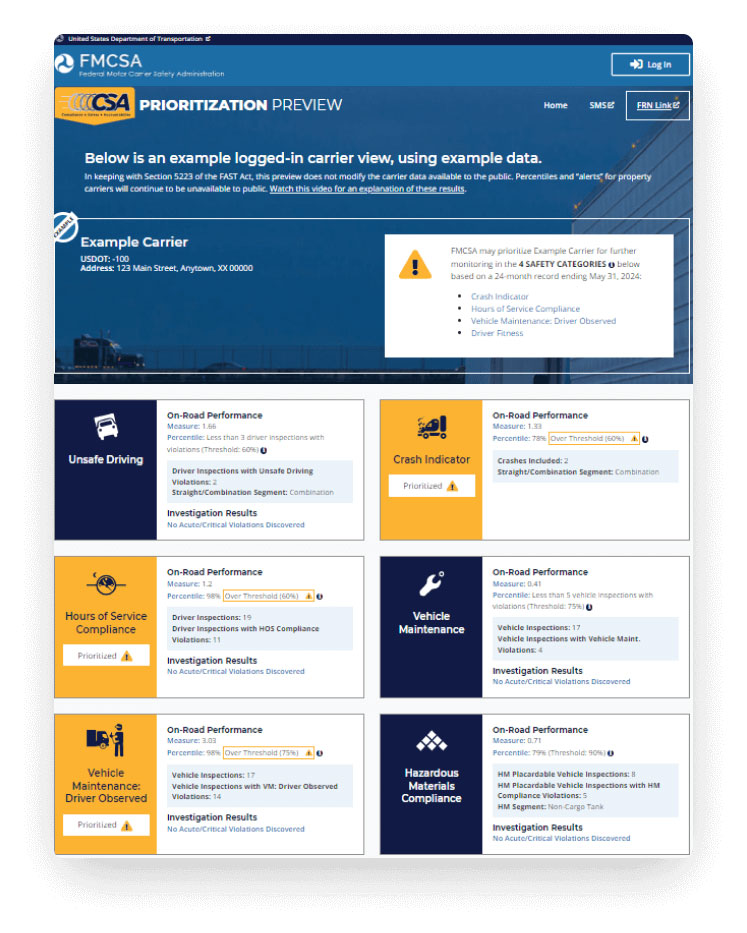
What Is a CSA Score and How Are CSA Scores Calculated
A CSA score quantifies the safety performance of a trucking company based on data collected from various sources. The FMCSA’s safety measurement system calculations primarily focus on three main areas: driver behavior, vehicle maintenance, and safety records.
Driver Behavior
This involves evaluating a driver’s driving and safety habits, taking into consideration factors like unsafe driving practices, driver fitness, and adherence to controlled substance regulations.
Vehicle Maintenance
A properly maintained vehicle is crucial in the industry. That’s why this component takes into account any maintenance-related issues discovered during inspections, such as brake failures, worn tires, or malfunctioning lights.
Safety Records
The history of safety violations, crashes, or incidents is also factored into the score. This includes the frequency and the severity of the accident.
By focusing on these safety improvement categories, the FMCSA aims to promote a culture of safety in the trucking industry.
Check out how you can access your CSA score, conduct a compliance review, and take steps to improve your fleet’s safety performance.
Key Components of Your CSA Score
Below is a detailed breakdown of the key components of your CSA score. A thorough understanding of each will help your business effectively address your existing safety issues.
Violations discovered in a compliance review or roadside inspection will contribute to a bad CSA score.
Driver Behavior
- Hours of Service (HOS) Compliance: Companies and drivers must adhere to federal regulations governing driver work hours, including on-duty, off-duty, and driving time.
- Unsafe Driving: These include violations such as speeding, reckless driving, and failure to wear seatbelts.
- Controlled Substances and Alcohol: Compliance with drug and alcohol testing regulations is essential. Positive drug or alcohol tests can have severe consequences for both drivers and carriers.
Vehicle Maintenance
Vehicles need to be properly maintained to minimize safety risks. Proper maintenance of trucks and trailers includes regular inspections, repairs, and following federal regulations for vehicle condition.
Safety Performance
- Crash Indicator: This is the number and severity of crashes involving the carrier’s vehicles.
- Hazardous Materials Compliance: This checks the adherence to regulations for transporting hazardous materials.
How CSA Violations Impact Your CSA Rating
Violations of the key components mentioned above can significantly lower your company’s CSA score, leading to severe consequences.
For example, truck drivers cited for unsafe behaviors, such as speeding or violating traffic regulations, contribute negatively to the unsafe driving category of the CSA score. This component directly reflects a driver’s reliability and a company’s commitment to road safety.
Similarly, vehicle maintenance violations, like brake failures or worn tires, serve as indicators of inadequate fleet management. Such deficiencies not only pose a safety risk but also highlight non-compliance with established safety standards.
When your company accumulates too many points from these violations, this will lead to heightened scrutiny by law enforcement and possibly an increase in penalties and fines.
Moreover, a low CSA score can escalate insurance premiums, damage the company’s reputation, and limit business prospects.
What Is a Good CSA Score?
A good CSA score reflects a high level of safety and compliance with FMCSA regulations.
What’s considered good is a score below the industry average. However, it’s ideal to get the lowest possible score. A low score demonstrates that your business has a strong safety culture, well-maintained vehicles, and compliant drivers.
Having a good CSA score is important to meet compliance requirements. But more than this, it enhances a company’s credibility within the industry. A favorable score can lower insurance premiums, attract more clients, and ensure fewer inspections during roadside checks.
Why Your CSA Score Matters
The FMCSA uses the CSA score as a critical tool to ensure that trucking companies uphold high standards of safety and regulatory compliance. It directly influences a company’s ability to operate efficiently.
By minimizing the risk of violations, companies can avoid heightened scrutiny from the FMCSA and other regulatory bodies and enjoy smoother operations without frequent roadside inspections.
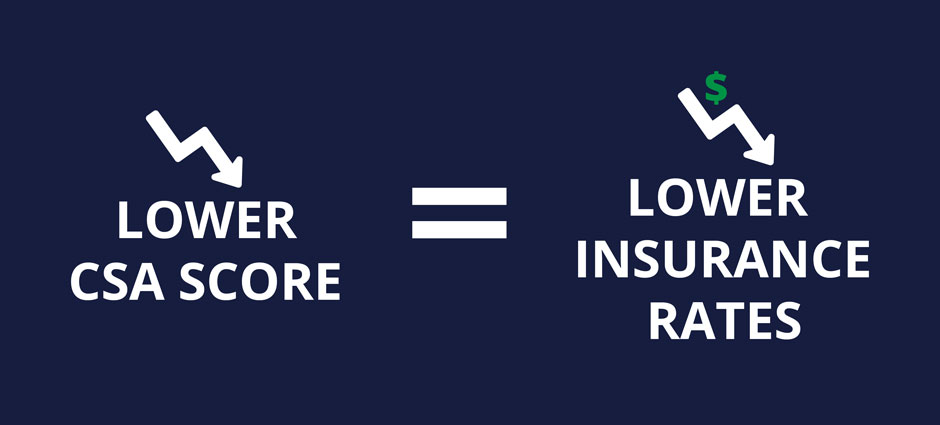
Moreover, a strong CSA score often translates to lower insurance premiums, which can improve a company’s financial standing.
By maintaining an exemplary safety record, you can have a crucial differentiator that can attract business opportunities and ensure long-term success.
Influence on Insurance Rates and Fleet Operations
A poor CSA score can significantly impact a trucking company’s financial health and operational efficiency through the following:
Higher Insurance Costs
Insurance companies view carriers with poor CSA scores as higher risk. This can translate to higher insurance premiums.
Furthermore, some insurers may be hesitant to provide coverage if you have poor safety records, limiting your options and potentially leading to incomplete coverage.
Operational Disruptions
Trucking companies with poor CSA scores are more likely to be targeted for roadside inspections and compliance reviews by the FMCSA.
Unfortunately, these inspections can lead to delays, fines, and out-of-service orders, disrupting your business operations.
It can also be more challenging to retain good drivers. Drivers are often attracted to companies with vital safety records. A poor CSA score can negatively impact morale and retention, leading to higher turnover costs.
Reputation and Compliance Risks for Trucking Companies
Aside from financial implications, a poor CSA score can also affect reputation and pose compliance risks.
A high CSA score indicates a lack of commitment to safety, which can erode trust with clients, shippers, and brokers. It can lead to:
- Negative public perception: Your business will be viewed as unsafe, damaging your brand image and reputation.
- Difficulty attracting and retaining customers: Customers often prioritize the safety of their goods. So if you have a poor CSA score, expect customers to turn away.
- Compliance issues: More frequent audits, more scrutiny, and violations can lead to higher fines and penalties. This can lead to inefficient operations, poor client satisfaction, and decreased revenues.
- Limited growth opportunities: A poor safety record can prevent a company from expanding its operations and entering new markets.
Common Mistakes That Hurt Your CSA Score
While it should be a company’s goal to get a strong CSA score, inevitable mistakes can quickly harm your score, leading to penalties, increased scrutiny, and damaged business prospects.
Common mistakes like neglecting maintenance, non-compliance to regulations, and failing to keep accurate records are just some of the ways that hurt your CSA score.
Failing to Keep Accurate Records
Accurate recordkeeping is critical for maintaining compliance with FMCSA regulations and protecting your CSA score.
Incomplete, missing, or disorganized records can lead to inaccurate CSA reporting, resulting in violations that harm your safety rating and overall business operations.
Some of the common recordkeeping issues are found in the following areas:
- Vehicle maintenance records
- Driver qualification files
- Accident records
- Hazardous materials (HM) records
Inconsistent Driver Logs and Violations
Driver logs are crucial for maintaining compliance with FMCSA regulations, particularly HOS rules.
These logs track a driver’s on-duty, off-duty, and driving time. Accurate and consistent driver logs are essential for several reasons:
- Safety: Proper log keeping helps prevent driver fatigue.
- Compliance: Accurate logs demonstrate compliance with FMCSA regulations and avoid fines.
- Efficiency: Well-maintained logs can help optimize route planning, improve fuel efficiency, and increase productivity.
On the other hand, mistakes or inconsistencies in driver logs can lead to violations of HOS regulations, which can directly impact a carrier’s safety score.
It can also lead to more audits, fines, and penalties.
Delayed Maintenance and Inspections
Neglecting regular inspections and maintenance poses a severe safety risk and can result in violations for issues like faulty brakes, worn tires, or broken lights.
Impact: These violations fall under the Vehicle Maintenance BASIC, one of the most common areas where carriers lose points. Frequent violations increase the risk of downtime during roadside inspections and costly repairs.
These violations are one of the most common areas where trucking businesses lose points. Frequent violations increase the risk of downtime during roadside inspections and costly repairs.
How to Improve and Maintain a Healthy CSA Score
Improving and maintaining a healthy CSA score requires a proactive approach to safety and compliance.
Some practical steps to take include:
- Implementing a strict maintenance schedule: Addressing issues and leveraging maintenance software can prevent vehicle-related violations.
- Comprehensive record-keeping: Regular internal audits can help identify any discrepancies and address them before they result in violations. Using digital records can also ensure accessibility and reliability.
- Foster a culture of safety and compliance: Cultivate an organizational culture where safety and compliance are the norm, such as recognizing drivers and staff who consistently uphold high standards.
Training Drivers and Maintaining Vehicles
Driver training and vehicle maintenance both directly impact safety and compliance. They contribute to a good CSA score because of improved safety performance, fewer DOT audits, and contribute to better business opportunities.
- Prevents unsafe driving violations: Regular training equips drivers with the knowledge and skills to follow safety regulations like following the speed limit, making proper lane changes, and not driving distracted.
- Builds awareness of FMCSA regulations: Drivers trained on current federal and state safety rules are less likely to break the law, avoiding costly violations inadvertently.
- Prevents roadside inspection failures: Properly maintained vehicles are less likely to be flagged for violations during roadside inspections.
- Improves hazardous materials safety: In transporting hazardous materials, regular maintenance reduces the risk of leaks or mechanical failures that can lead to violations.
The Role of DOT Compliance Group in Boosting Your Score
Need to boost your CSA score? Partnering with DOT Compliance Group can make a big difference because of our expertise in managing compliance and safety programs.
We specialize in providing comprehensive and tailor-fit solutions that focus on maintaining rigorous safety standards and compliance with FMCSA regulations.
With our experienced team working with you, expect thorough Compliance Reviews, effective training sessions, and strategic advice to help you meet any regulatory changes.
With DOT Compliance Group, your business can minimize the risk of violations and significantly improve your safety scores.
Visit our website to learn more about partnering with DOT Compliance.

Monitoring Your CSA Score Regularly
Regularly monitoring your CSA score is crucial for maintaining compliance and ensuring the long-term success and safety of your business.
Some of the benefits this offers are:
- Early Issue Detection: This allows you to spot trends and recurring problems.
- Proactive Compliance: You can address areas of concern proactively through driver training, better maintenance, or process improvements.
- Avoiding FMCSA Interventions: High CSA scores can lead to audits, investigations, or potential Out-of-Service Orders.
Why Choosing DOT Compliance Group Makes a Difference
DOT Compliance Group plays a pivotal role in monitoring and improving CSA scores for businesses. We have a team of specialists who are equipped to conduct detailed Compliance Reviews, identify potential areas of non-compliance, and develop actionable strategies to address these issues before they escalate.
We also provide ongoing support through regular performance reviews and updates, especially on any changes in FMCSA regulations.
We make it easy for you to safeguard your CSA score with our solutions customized to your business operations. As your partner, you can trust DOT Compliance Group to uphold the highest standards of safety and compliance.
Contact us today to improve your CSA score.